A specialist insurance claims handling business needed a reliable flow of enquiries from property owners dealing with fire, flood, theft, and drainage damage. Google Ads, managed correctly, became the engine that delivered them.
This Brighton-based business operates as an independent loss assessor, handling property insurance claims on behalf of policyholders who have suffered fire, flood, theft, drainage, or commercial damage. Where an insurer sends its own adjuster to minimise the payout, this client sends theirs to maximise it.
The nature of the service means demand is event-driven. When a homeowner’s kitchen catches fire, or a burst pipe floods the ground floor, they need help quickly and they are searching for it immediately. Google Ads is the obvious channel: be visible at the exact moment someone searches “fire damage insurance claim help” and you can convert that search into a consultation before the client has time to find anyone else.
The challenge was building a campaign structure that could capture this intent reliably, consistently, and at a cost per enquiry that made business sense. That required getting the targeting, the ad copy, the negative keyword management, and the bidding strategy working together correctly, and keeping them working as the account matured.
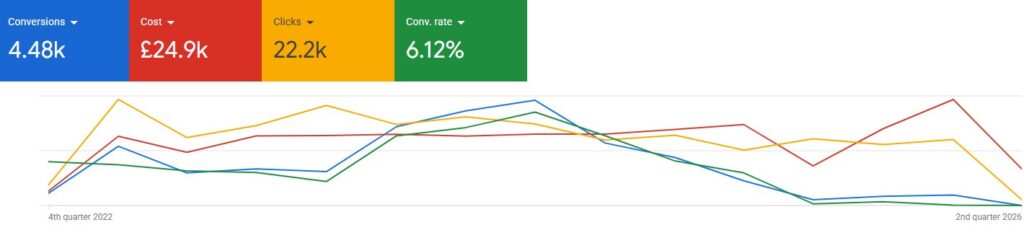
The primary campaign, built around Google’s Performance Max format with a carefully managed set of assets, negative keywords, and geographic targeting, has delivered thousands of enquiries across the life of the partnership at a cost that makes every lead commercially viable for the business.
There is no single tactic that drives performance at this level. It is the combination of structure, targeting, copy, and ongoing management working together that produces consistent results.
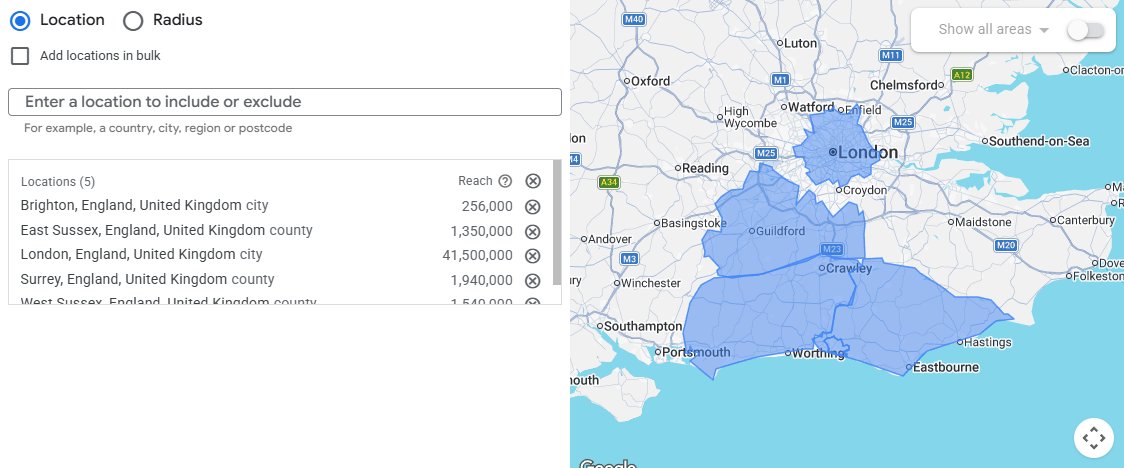
Fire claims, flood claims, theft, drainage, and commercial losses each attract a different type of searcher using different language. Grouping them into a single campaign would force generic ad copy and dilute performance. Separate campaigns mean every searcher sees an ad written specifically for their situation, landing on a page built specifically for their claim type. The relevance drives better click-through rates and better conversion rates simultaneously.
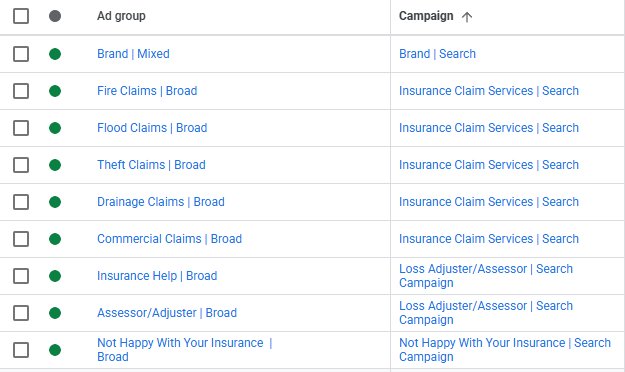
The business operates across East Sussex, West Sussex, and Surrey. Ads are configured to serve exclusively to people physically located within those counties, not to anyone searching for those locations from elsewhere in the UK. This is the difference between spending budget on people who can actually become clients and spending it on researchers, students, or people outside the service area. Every click comes from within the catchment.
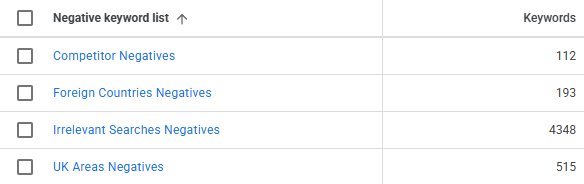
Insurance is one of the most crowded keyword categories in Google Ads. Without rigorous negative keyword management, budgets are consumed by queries about car insurance, travel insurance, insurance jobs, competitor brand names, and countless other irrelevant searches. This account maintains four separate negative keyword lists covering competitors, out-of-area locations, and global irrelevant terms. Keeping these lists current and accurate is one of the most direct levers on cost per lead.
Every ad group has headlines specific to the claim type it serves. A person searching for help with a fire damage claim sees fire-specific language in the ad, clicks through to a fire-specific landing page, and sees a call to action that speaks directly to their situation. This chain of specificity, from search query to headline to landing page to form, is what converts clicks into enquiries. Generic copy generates traffic. Specific copy generates leads.
The goal for any business investing in Google Ads is not a single strong month. It is a predictable flow of enquiries that the sales team can plan around. Insurance claims are event-driven by nature, which means demand fluctuates with weather, news cycles, and seasonal patterns. The account is managed to smooth that volatility as much as possible while capturing every spike in demand when it arrives.
When the primary campaign is running at full efficiency, the business receives multiple new enquiries every single day. The management process focuses on keeping the account in that state: monitoring which ad groups are performing, reviewing the search terms that are triggering ads, adjusting budgets in response to seasonal demand, and refreshing ad copy regularly so the automated bidding system always has fresh combinations to test.
The consistency is the result of ongoing attention. Campaigns that are set up and left alone drift. Automated systems make changes without human review. Budgets become misallocated. The monthly management work, reviewing what has changed, what has improved, and what needs correcting, is what protects the cost per lead over time.
The best results in Google Ads are not the product of a clever setup. They are the product of sustained, attentive management over time. The account improves because someone is watching it, week in, week out, and making the right calls.
Service Campaigns Built
Across geotechnical, contamination, drainage, utility, and investigative services, each with its own ad copy and keyword set.
We use cookies to enhance your browsing experience and analyse our traffic. By clicking "Accept", you consent to our use of cookies.